4 min read
How does root canal treatment work?
Root canal treatment aims to keep a tooth that is badly decayed or infected. When it's needed, what happens step by step, and how to look after the tooth afterwards.
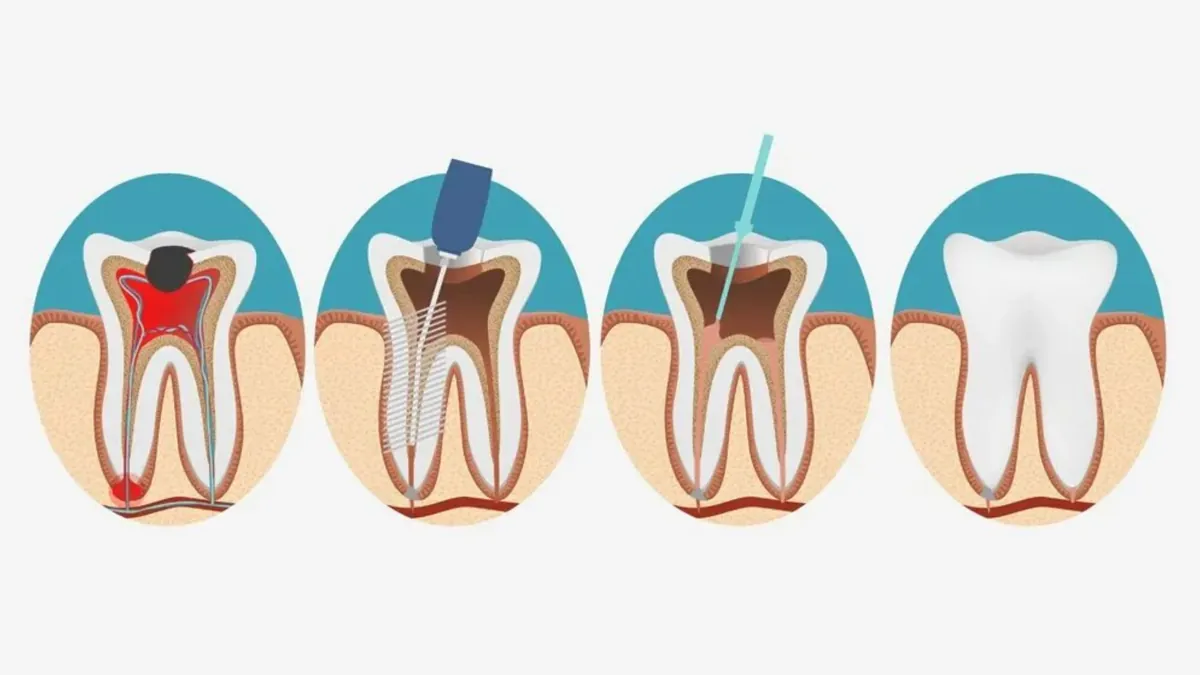
Root canal treatment aims to keep a tooth that is badly decayed or infected. The nerve and pulp are removed, and the inside of the tooth is cleaned and filled. If a painful tooth is ignored for too long, the infection can spread to the surrounding tissue and the tooth may be lost — so starting early matters.
What is root canal treatment (endodontics)?
Not every cavity needs a root canal. It's considered when decay has gone too far to be fixed with a filling, and the tooth is inflamed and painful. Untreated decay spreads deeper and can inflame the nerve, causing strong pain, darkening of the tooth and sensitivity to hot and cold.
Beneath the hard enamel, each tooth has a pulp — blood vessels and nerves running down the root. In root canal treatment this soft tissue is removed, the canals are cleaned and the space is filled. The nerve only senses hot and cold; removing it doesn't affect how the tooth works, but it does end the pain.
Contrary to its reputation, the treatment itself shouldn't hurt: the tooth and the area around it are numbed just as for a filling. Modern instruments have also made it quicker and easier than it used to be.
Why is it needed?
The pulp can be damaged by deep decay, a crack or a knock to the face. Damaged tissue lets bacteria grow inside the root canal, which can lead to an abscess — causing strong pain, swelling of the face or neck and bone loss around the root. Toothache often gets worse at night and can disturb sleep and concentration.
Signs that you may need one
- Strong pain when chewing or biting
- Painful sensitivity to hot or cold
- Darkening of the tooth
- Swollen or tender gums next to the tooth
Injury, grinding or clenching, fillings that sit too high and long-untreated gum disease can also cause a tooth to lose its vitality and become inflamed.
What happens during treatment
- An X-ray shows the shape of the root canals and any infection in the surrounding bone.
- The area is numbed with local anaesthetic — usually even if the nerve has already died, for your comfort.
- A thin rubber sheet is placed around the tooth to keep the area dry.
- A small opening gives access to the root canal; bacteria, decayed nerve tissue and pulp are removed.
- The canals are shaped and cleaned with files of increasing size, and rinsed.
- Once clean, the canals are filled and the opening is sealed.
Before your appointment
- Tell your dentist about your medical history, medicines and supplements.
- Mention any allergies, and whether you are pregnant or breastfeeding.
- Let your dentist know in advance if you take blood thinners.
- If you have a cold or flu, it may be better to postpone.
- Don't drive until the anaesthetic has worn off.
Afterwards
- Brush gently at least twice a day.
- Floss at least once a day.
- Avoid sticky and sugary food for a while.
- Take the painkiller your dentist recommends, and get in touch if the pain doesn't settle.
Will it hurt afterwards?
Discomfort after a root canal is usually no more than after an ordinary filling; most of it comes from the inflammation that was there before treatment. Some tenderness for a few days is normal and eases with painkillers.
What are the alternatives?
Root canal treatment usually works well, and a well-cared-for tooth can last for many years. Where it's possible, keeping your natural tooth is usually the first choice. The alternative is usually removing the tooth and replacing it with a bridge, an implant or a removable denture — which generally takes longer.
Is root canal treatment painful?
No. It's done under local anaesthetic, so you shouldn't feel pain during the procedure.
How long does it take?
It depends on the number of canals, the tooth's position and any infection. Without infection it can be finished in one visit; usually it takes two. A session can last up to 45 minutes.
Can it be redone?
Yes. If it doesn't succeed, the old filling is removed, the canals are reshaped and disinfected, and filled again.
How long will the tooth last?
With good oral hygiene, a treated tooth can last for many years.
This article is general information and does not replace an examination by a dentist.